How Law Firms Can Use Google Business Profile Posts to Improve Local SEO
July 9, 2026
6-minute read

SEO, or search engine optimization, helps your website appear in Google, AI search, and other discovery platforms. Learn what SEO means, how it works, and how to start optimizing your site.

SEO, or search engine optimization, is the process of improving your website so it can appear when people search for topics, products, or services related to your business. Today, that includes traditional search engines like Google, Bing, and DuckDuckGo, as well as AI search tools like ChatGPT, Perplexity, and Claude.
Search engines discover webpages through automated crawlers, which follow links and fetch page content for analysis. Once a page is crawled, the search engine processes its HTML, text, images, internal links, structured data, canonical signals, and technical elements to determine what the page is about.
Pages may be excluded if they are duplicative, low quality, inaccessible, blocked from crawling or indexing, or otherwise unlikely to provide meaningful value to users. Pages that meet the search engine’s quality and accessibility thresholds may then be stored in the search index, which functions as a massive searchable database of webpages.
When someone performs a search, the search engine interprets the query to understand the user’s intent, then retrieves and ranks relevant pages from the index. Ranking is based on many signals, including topical relevance, content quality, authority, trust, user experience, page accessibility, freshness, and how well the page satisfies the query.
Search results may also be adjusted based on contextual and personalization signals, such as the user’s location, language, device, search settings, and, where applicable, prior search behavior.
SEO helps your business appear in front of users actively searching for your products, services, or expertise.
If you ignore SEO, you risk losing visibility across the search ecosystems, such as including Google AI Overviews, featured snippets, local map results, image and video search, Reddit, YouTube, ChatGPT, Gemini, Perplexity, and other AI-powered answer engines. As a result, competitors that have strategically optimized their products, services, and content are more likely to capture the qualified traffic, leads, and revenue that could have gone to your business.
A strong SEO strategy requires a combination of on-page SEO, off-page SEO, technical SEO, and local SEO working together to improve how search engines discover, understand, trust, and rank your website. Each area supports a different part of search visibility — from the quality of your content and the authority of your brand to the technical health of your site and your presence in local search results.
AI SEO is not a completely separate discipline from traditional SEO. In most cases, the same fundamentals that help a page perform in organic search also improve its chances of being referenced, summarized, or surfaced in AI-powered search experiences. High-quality content, strong topical authority, clear site structure, trustworthy signals, authoritative backlinks, and technical accessibility all matter.
The nuance is that AI search often rewards content that is especially clear, well-structured, and easy to extract. Pages that directly answer common questions, provide concise explanations, cite credible sources where appropriate, use consistent entity information, and demonstrate real expertise are more likely to be useful to AI systems. This means SEO content should not only target keywords, but also clearly explain concepts, compare options, define entities, and answer follow-up questions users may ask.
AI SEO builds on traditional SEO. The goal is still to create helpful, authoritative, and accessible content — but with greater emphasis on clarity, context, trust, and answerability.
Work with a legal marketing partner that has helped law firms generate hundreds of millions in revenue.
Strong SEO content should be useful, specific, easy to navigate, and technically sound. Before publishing, make sure the page clearly answers the user’s question, targets the right search intent, includes meaningful examples or expertise, and gives search engines enough context to understand the topic, location, service, and audience. The goal is not to check boxes for the sake of optimization — it is to create a page that is genuinely helpful, easy to interpret, and worthy of being ranked, referenced, and trusted.
Poor SEO tactics can weaken trust, confuse search engines, and create a bad experience for users. Avoid keyword stuffing, copying competitor content, publishing thin AI-generated pages, buying spammy backlinks, creating unnecessary duplicate pages, or writing vague title tags that do not describe the page. Technical mistakes can also hold back performance, including slow load times, poor mobile usability, missing alt text, blocked CSS or JavaScript, and failing to set up Google Search Console. SEO also requires patience — expecting instant results often leads to shortcuts that hurt long-term performance.
SEO and SEM are both strategies used to improve visibility in search engines, but they work in different ways.
The biggest difference is timing and cost. SEO usually takes longer to produce results, but it can create more sustainable visibility over time. Once a page ranks well organically, it can continue bringing in traffic without paying for every click. SEM can generate visibility much faster because paid ads can appear in search results almost immediately, but that visibility usually stops when the ad budget stops.
For most businesses, we recommend using SEM as a combined strategy of SEO and PPC. SEO builds long-term organic visibility, while PPC can generate more immediate traffic, leads, and keyword data while your SEO efforts gain momentum. This balanced approach helps you compete now while building a more sustainable search presence over time.
The caveat is that paid ads need to be managed carefully. Without the right targeting, landing pages, tracking, and budget controls, PPC can waste money quickly. If you are not experienced with paid search, it is often worth working with a qualified specialist to avoid inefficient spend.
SEO reporting should go beyond total users, sessions, or keyword rankings. The real question is whether organic search is helping generate qualified leads, conversions, and revenue. Attribution is harder than ever because users interact with brands across search results, AI overviews, zero-click searches, ads, social platforms, review sites, and direct visits before converting. That means SEO success should be evaluated through a combination of signals, including homepage views, branded search growth, branded searches with your products or services, form submissions, calls, booked consultations, sales, and revenue.
Traffic may not always increase in a straight line. In some cases, organic clicks can decrease because users get answers directly from search results, featured snippets, or AI-generated overviews. But if brand demand, qualified leads, conversions, and revenue are improving, your marketing is likely moving in the right direction. If leads are increasing but sales or conversions are not, it may be a sign that your search efforts are reaching the wrong audience.
Recent industry data suggests that ChatGPT and other AI tools are not replacing Google search; in many cases, users are using both together. Some users may begin their research in an AI tool, then return to Google to verify information, compare options, or navigate to specific brands. In fact, Semrush reported that more than 20% of ChatGPT referral traffic goes to Google, suggesting that AI search can feed additional search activity rather than fully replace it.
Google still drives the overwhelming majority of search referral traffic compared to standalone AI platforms. While ChatGPT referral traffic is growing, traditional search remains the dominant channel for website discovery, so businesses should continue investing in SEO while also monitoring visibility across AI-powered search experiences.
Search intent is the reason behind a user’s search query. In other words, it explains what the person is trying to accomplish when they type something into Google. They may be looking for information, comparing options, trying to find a local business, or ready to make a purchase or contact a service provider. Understanding search intent is critical because your content needs to match what the user actually wants, not just include the right keywords.
Informational intent: The user is looking for information, education, or an answer to a question. Example: “what to do after a car accident”
Navigational intent: The user wants to find a specific website, brand, page, or location online. Example: “Daggett Shuler law firm”
Commercial intent: The user is researching options before making a decision. They may be comparing products, services, companies, or solutions. Example: “best car accident lawyer”
Transactional intent: The user is ready to take an action, such as buying, booking, calling, downloading, or requesting a quote. Example: “disability law firm free consultation”
Local intent: The user is looking for something in a specific geographic area or near their current location. Example: “personal injury lawyer near me”
SEO keywords are the words and phrases people use when searching for information, products, or services online. Additionally, they help search engines understand what a page is about and help businesses align their content with what potential customers are actually looking for.
For example, in Chicago, a phrase like “car accident injury law firm” receives only around 30 monthly searches, while broader terms such as “car accident lawyer” or “lawyer for auto accident” receives over 5,000 monthly searches. Choosing the right keyword matters because targeting a phrase with too little demand can limit traffic, while targeting a highly competitive phrase may take more time, authority, and resources to rank.
For smaller law firms, the best approach is often to target a mix of competitive primary keywords and more specific long-tail keywords, such as location-based, question-based, or service-specific searches. These lower-volume terms can be easier to rank for and may attract users who are closer to taking action.
A backlink is a link from another website to your website. Search engines can use backlinks as signals that other sites find your content useful, credible, or worth referencing. Not all backlinks are equal. A relevant link from a trusted website is usually more valuable than many low-quality links from unrelated or spammy sites. Link building is the process of earning backlinks from other reputable websites to your own.
Google Analytics is a free analytics platform from Google that helps website owners understand how users interact with their website. It provides data on traffic sources, user behavior, page views, engagement, conversions, events, and audience insights. For SEO, Google Analytics is useful for seeing what users do after they land on your site, such as which pages drive engagement, which channels generate leads, and where visitors may be dropping off.
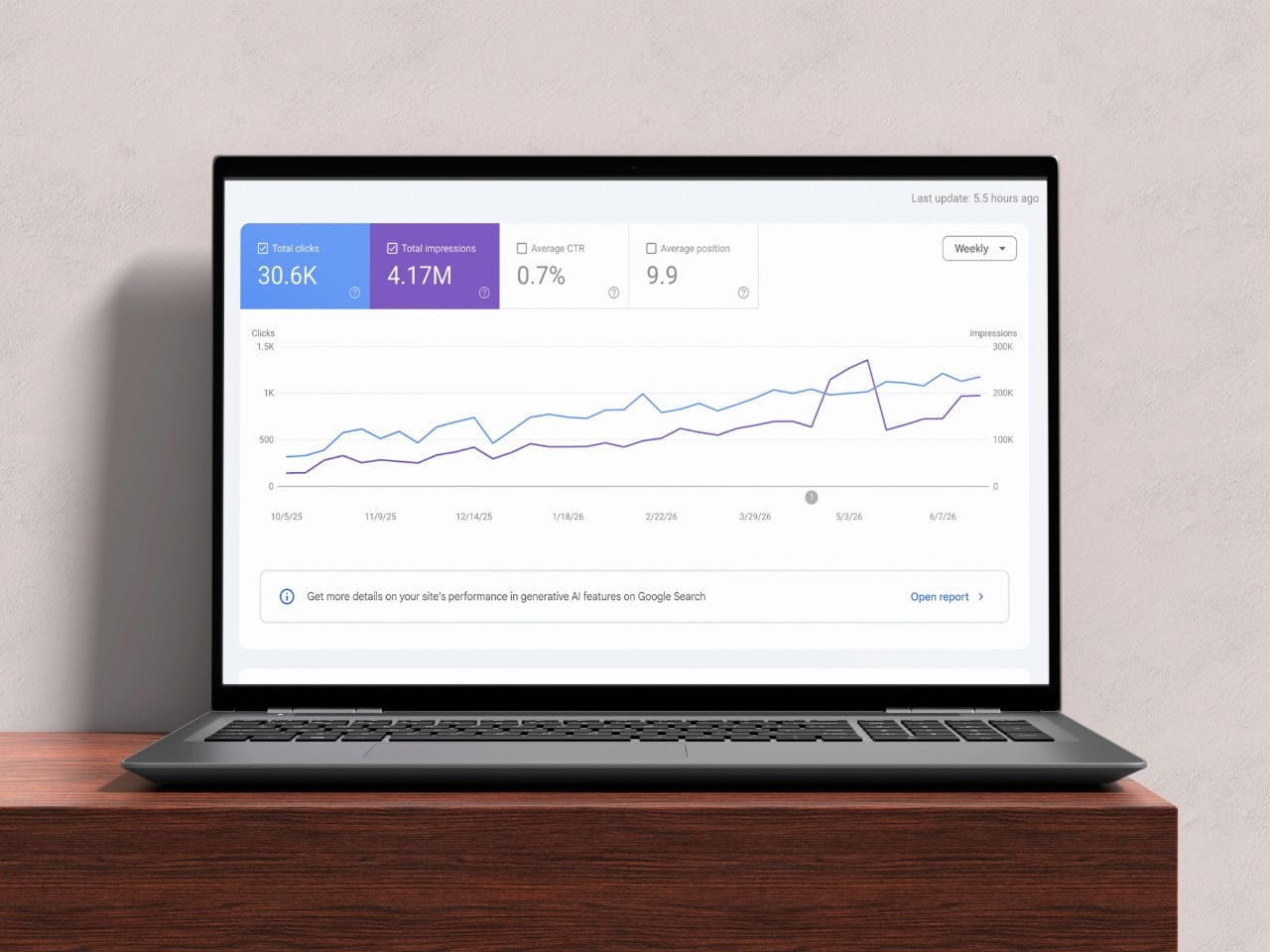
Google Search Console (GSC) is a free tool from Google that helps website owners monitor and improve their site’s performance in Google Search. It provides valuable search data, including clicks, impressions, average ranking position, click-through rate, search queries, and page-level performance. GSC is also useful for identifying indexing issues, crawl errors, Core Web Vitals problems, and other technical SEO issues that may need attention.
Google Search Console focuses on how your site performs in Google Search, including clicks, impressions, rankings, search queries, indexing, and technical search issues.
Google Analytics focuses on what users do after they arrive on your website, including traffic sources, page views, engagement, conversions, and user behavior.
In short, both are free tools from Google that measure different parts of your website's performance. Search Console shows how people find you in Google Search, while Google Analytics shows what they do once they get to your site.
SEO usually takes time because search engines need to crawl, index, evaluate, and trust your content. Some improvements, such as fixing technical issues or optimizing existing pages, may show results within a few weeks. Larger gains often take several months, especially in competitive industries or markets. In general, SEO should be viewed as a long-term strategy where consistent improvements to content, authority, technical performance, and user experience compound over time.
Absolutely! Especially if you have a smaller website and are willing to learn the fundamentals. Basic SEO tasks include improving page titles, writing helpful content, optimizing service pages, adding internal links, setting up Google Search Console, and fixing simple technical issues.
Search Engine Optimization becomes more complex when you are in a competitive market, have a larger website, rely heavily on organic leads, or need advanced technical, local, or content strategy support.
If managing SEO would pull you away from running your business, serving clients, or focusing on higher-value work, it may be more efficient to hire an SEO agency or qualified freelancer who can handle the strategy, execution, and ongoing optimization.
SEO costs vary based on your goals, industry, location, competition, and the amount of work needed. A small local business may need a modest monthly budget for basic optimization and content updates, while a competitive law firm, ecommerce site, or multi-location business may require a larger investment. In general, SEO pricing depends on the scope of work, such as technical audits, keyword research, content creation, link building, local SEO, reporting, and ongoing strategy.
In competitive markets, a limited SEO budget can make it harder to gain traction quickly because strong organic results often require consistent content development, technical improvements, authority building, and ongoing optimization. In these situations, paid advertising can help generate visibility and leads while SEO efforts build momentum.
A larger SEO budget can accelerate progress by allowing for more comprehensive keyword research, higher-quality content production, technical SEO improvements, digital PR, link earning, local SEO, and conversion optimization. However, a bigger budget does not guarantee rankings. Results still depend on strategy, execution quality, competition, site authority, and how well your content satisfies search intent.
| Resource | Description | Best For |
|---|---|---|
| Google SEO Starter Guide | Google’s beginner-friendly guide to SEO basics, including how search engines find, crawl, index, and understand your website. | Beginners learning SEO fundamentals. |
| Google Search Essentials | Explains the technical, spam, and best-practice requirements that help websites become eligible to appear in Google Search. | Understanding Google’s core search requirements. |
| Creating Helpful, Reliable, People-First Content | Guidance on creating useful, trustworthy content designed for people rather than content made only to attract search traffic. | Content strategy and quality improvement. |
| Google Search Console | A free Google tool that helps you monitor search performance, indexing, search queries, technical issues, and website visibility. | Tracking and improving your site’s Google Search performance. |
| Learn About Sitemaps | Explains how sitemaps help Google discover important pages on your website and understand your site structure. | Improving crawlability and indexing. |
| Introduction to robots.txt | Covers how robots.txt files work and how they can guide search engine crawlers on which URLs they should or should not crawl. | Technical SEO and crawler management. |
| Title Links in Google Search | Explains how Google generates title links in search results and how to write better page titles. | Improving search result headlines and click-through rate. |
| Snippets in Google Search | Describes how Google creates search result snippets and how meta descriptions and page content can influence them. | Improving search result descriptions. |
| Intro to Structured Data | Introduces structured data and how it can help Google understand your content and make pages eligible for rich results. | Rich results and advanced search appearance. |
| PageSpeed Insights | A free tool for analyzing page speed, Core Web Vitals, and user experience issues on desktop and mobile. | Site speed, performance, and technical SEO. |
| Google Search Central Blog | Official updates from Google Search Central about search changes, documentation updates, ranking systems, and SEO guidance. | Staying current with Google Search updates. |
Below is more information about the author (or authors) plus suggested reading for articles related to this topic.